Good shower tile ideas start with a simple fact: every surface in a shower has a different job. The walls shed water, the floor has to grip wet feet, the niche and edges show the quality of the work, and the grout decides how the whole thing ages. So this guide goes surface by surface, with a comparison table of the common materials first. For layouts, entries and glass, see our guide to planning a walk-in shower.
Shower tile materials compared
Most showers combine two or three of these.
| Material | Slip on a wet floor | Upkeep | Where it works |
|---|---|---|---|
| Large-format porcelain | Depends on the finish; not usual on a sloped shower floor | Low: absorbs very little water, no regular sealing, few grout lines | Walls, especially in a small shower |
| Marble-look porcelain | Choose a matte or textured finish for floors | Low: no regular sealing | Walls and floors where you want the look of stone |
| Real marble | Polished marble is a poor choice underfoot | High: porous, needs sealing on a schedule, acidic cleaners can etch it | Better on the vanity top or outside the spray |
| Glazed subway or handmade-look ceramic | Wall tile | Glossy glaze wipes clean; many grout lines to care for | Walls in almost any style |
| Dimensional (textured) tile | Wall tile | Grooves hold soap film and hard water deposits | A feature wall in a shower that gets a quick squeegee |
| Pebble | Good grip from many grout joints | Wide, uneven grout that needs a stain-resistant grout | Shower floors |
| Small mosaic (penny round, hexagon) | Good grip from many grout joints | More grout to clean; white marble mosaics need sealing | Shower floors, and larger sizes on the bathroom floor |
Shower tile ideas for the walls
Wall tile covers the most area, so it sets the style. Choose the walls first, then pick a floor to match.
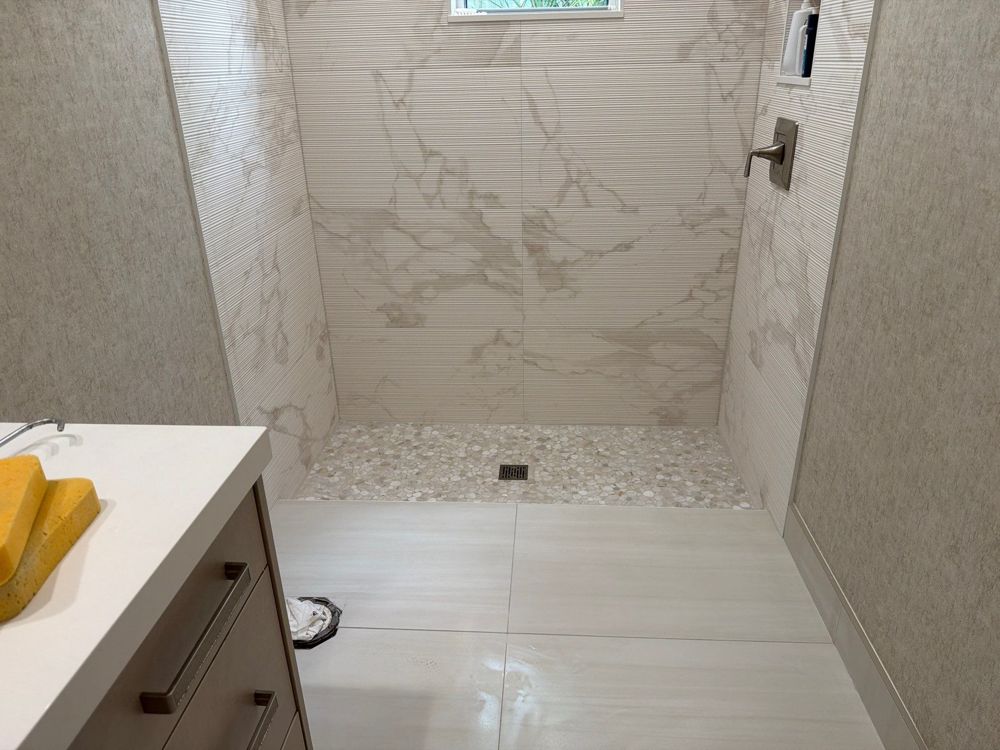
Large-format porcelain for a calm, easy-clean wall
Large-format tile puts big pieces on the wall, often two feet or more on a side. Fewer grout lines mean less to scrub, and the calm surface makes a small shower feel larger. However, big tiles need a very flat wall. Any bump shows up as lippage, where one tile edge sits higher than the next. As a result, prep takes longer, and labor drives more of the cost than the tile itself.
Marble-look porcelain instead of real stone
Marble-look porcelain prints stone veining onto a dense porcelain body, so it does not need regular sealing. Real marble is softer and more porous. In Palm Beach County humidity, a damp, porous stone can also stain or grow mildew faster. That is why porcelain carries the look of stone in so many showers today.
Subway tile, stacked or offset
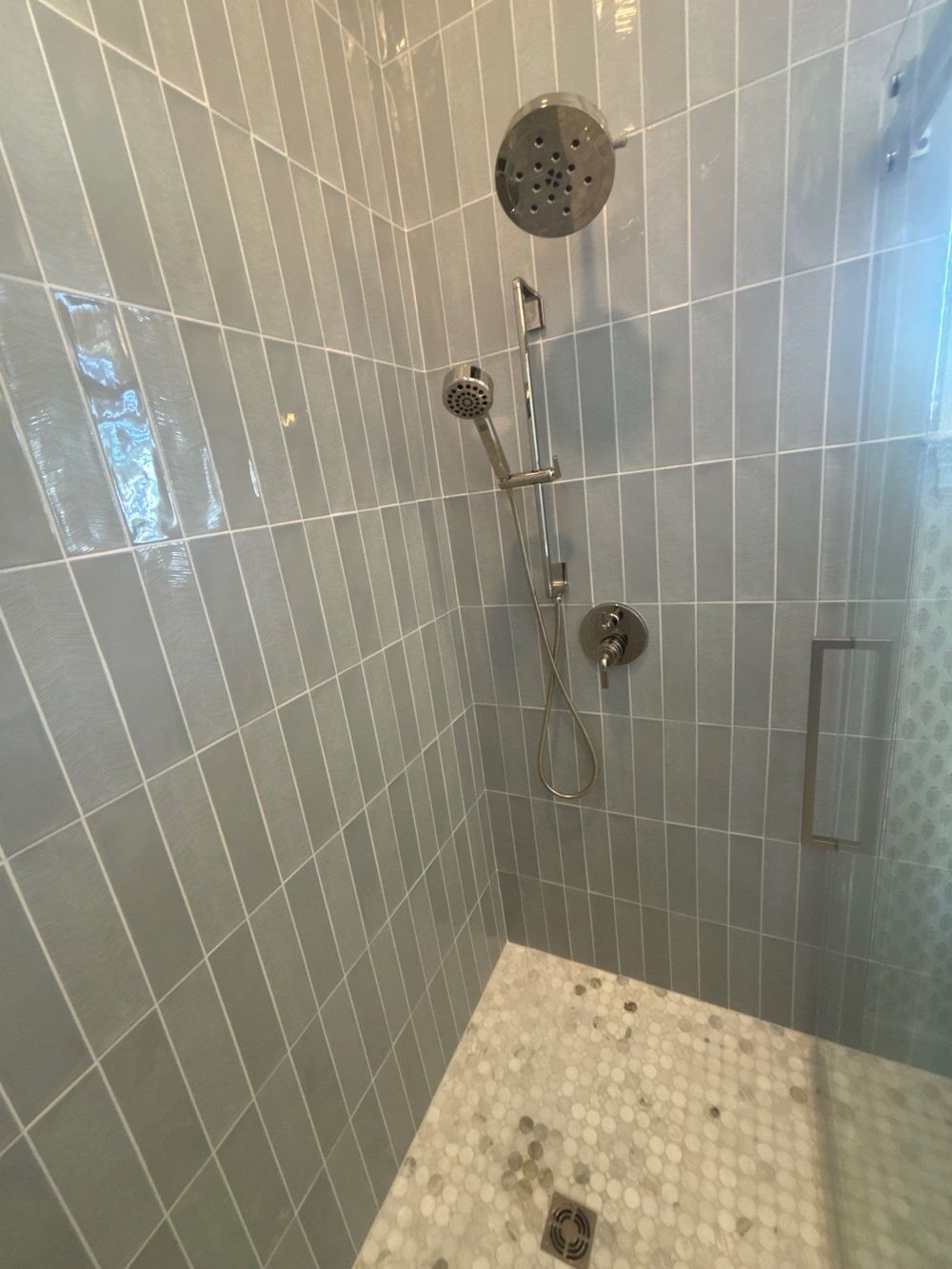
Subway tile is a small rectangle, often laid in a running bond, where each row shifts by half a tile. It suits the most styles, a broken piece is easy to replace, and it usually costs less to buy than large porcelain or stone. For a newer look, try a one-third offset, or turn the tile vertical.
A vertical stack sets long, narrow tiles straight up in columns with every joint lined up. The vertical lines make a low ceiling feel taller. However, a stack hides nothing: if a wall is out of plumb, the lines show it, and poor planning leaves thin slivers at the corners.
Handmade-look and dimensional tile
Handmade-look tile varies slightly in color and shine from piece to piece, which adds depth to one plain color. The uneven faces make a less flat wall, though, so joints often run wider. A machine-made tile with a handmade look gives a similar effect and cleans more easily.
Dimensional tile has a raised or grooved face, such as fine ridges, waves or fluting. It is hard to cut cleanly, so plan a metal trim for the cut edges.
One patterned wall, tiled to the ceiling
Herringbone sets rectangles in a zigzag. Chevron uses tiles cut at an angle so the points meet in a clean line. Use either on the back wall and keep the side walls simple. Both need many angled cuts, so they take more time and waste more tile.
Whatever the pattern, consider running the tile all the way up. Tile that stops at shower head height leaves painted drywall above it, and in a steamy shower that paint can bubble, peel or grow mildew. Full-height tile looks more finished, but it only protects the wall if the waterproofing behind it goes up just as high.
The shower floor: grip first
A shower floor must slope to the drain, grip wet feet and handle standing water. So floor tile is usually smaller than wall tile. The classic pairing is a large tile on the walls and a small tile underfoot.
Pebble
Pebbles on a mesh sheet follow the slope easily, and the many joints give bare feet good grip. The grout lines are wide and uneven, however, so they need a stain-resistant grout and regular cleaning. Sliced, flat-top pebbles feel smoother than rounded ones, and dark pebbles hide soap film better than white.
Penny round, square and hexagon mosaics
Penny round tiles are small circles about the size of a coin. Small square, rectangular and hexagon mosaics work the same way: small pieces bend to the slope of a center drain, and the joints add grip. More grout does mean more cleaning. White marble mosaics show hard water marks and need sealing, so a stone-look porcelain mosaic is a lower-upkeep choice. Hexagons can tie the room together, small in the shower and larger on the bathroom floor.
A floor that runs into the room
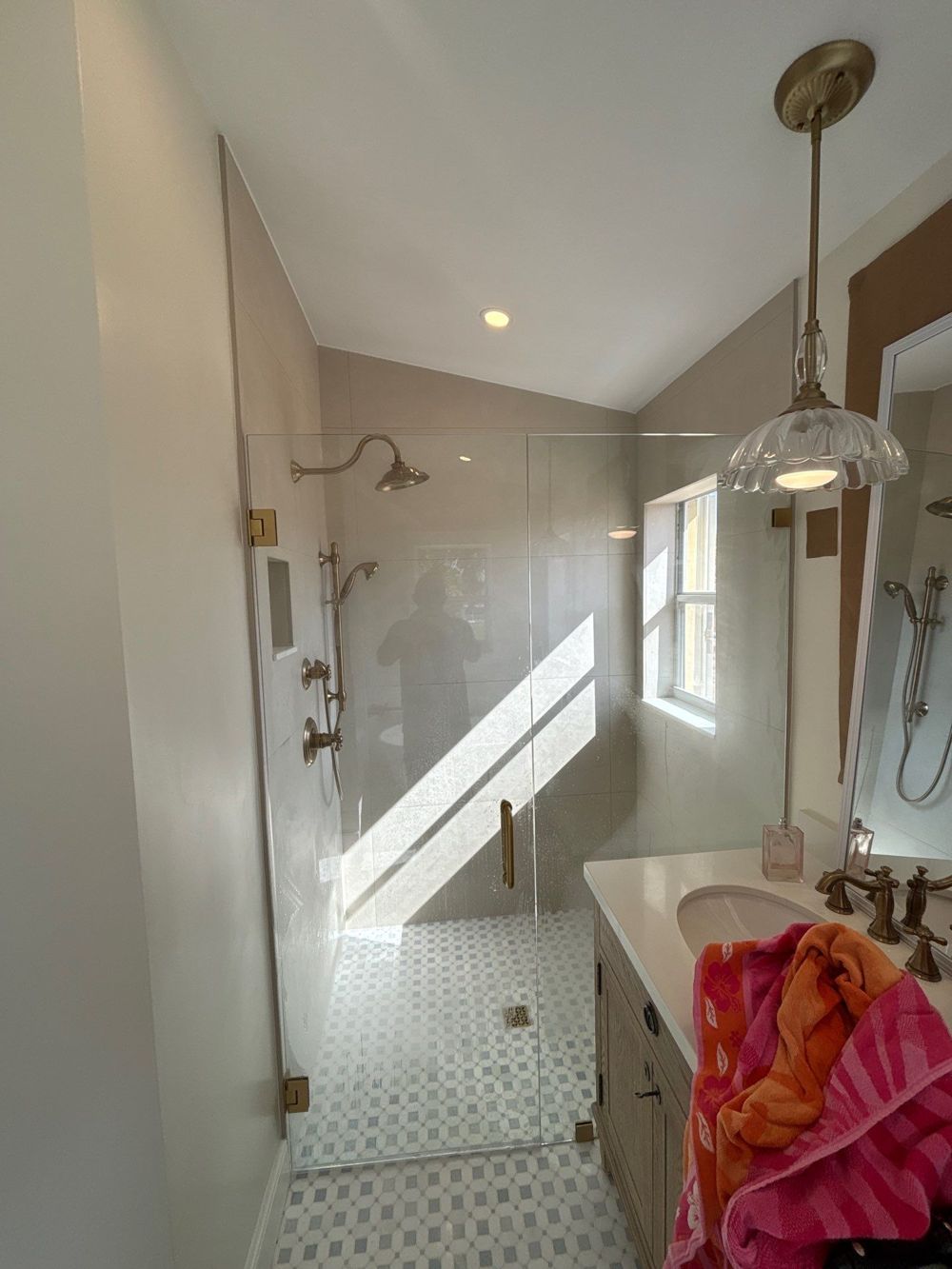
A patterned mosaic can cover the shower floor and continue across the bathroom. With clear glass and a low curb, the floor reads as one surface, and the room looks larger. The slope, the drain and the pattern must all line up at the entry, so this takes careful planning. In a condo, check the association rules for hard floors and sound underlayment first.
Check the slip rating
Looks are not enough underfoot. The Tile Council of North America explains that ANSI A326.3 is the test method for dynamic coefficient of friction, or DCOF, which measures how slippery a hard floor is. Ask for the DCOF result, and check that the product’s use class covers interior wet areas. A matte or textured finish usually grips better than a polished one. The 2010 ADA Standards also call for slip-resistant floors. For personal fall risk, ask a doctor or an occupational therapist.
Niches, accents and edges
These shower tile ideas take little extra material, but they need planning before the first tile goes up.
Size the niche to the tile. A niche looks best when its top and bottom line up with the grout joints on the wall. With large-format tile, the niche may take one full tile height. With a vertical stack, center it on a column. The niche shelf also needs a slight slope toward the shower so water drains out.
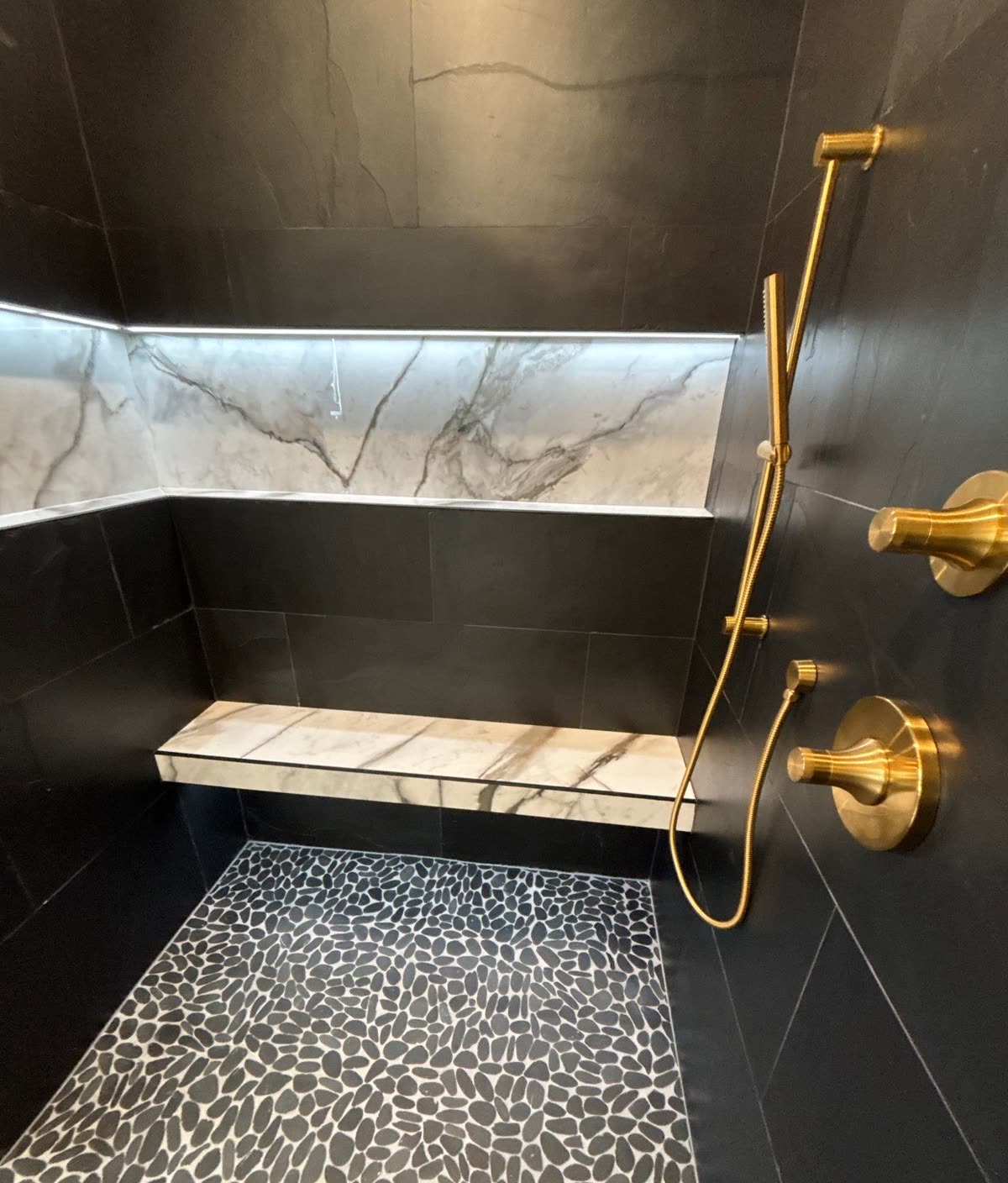
Use one accent, not three. A band of contrast tile gives the shower a focal point. For example, a light marble-look tile can line a long niche in a dark shower, as in the photo below. A strip of light at the top makes the veining glow at night. Any light inside a shower must carry a wet-location rating.
Finish every edge. A metal edge profile covers a cut edge in a clean line; pick stainless steel or anodized aluminum for wet areas. Bullnose tile has one rounded, glazed edge that suits a classic subway look. A mitered corner cuts two tiles at an angle so they meet with no visible edge. Mitered corners look the most refined, but they take the most skill and time.
Grout: where humid showers fail first
Grout usually fails before tile does. It stains, cracks and grows mildew, and in Palm Beach County the humid air slows drying after every shower. The EPA guide to mold and moisture advises indoor humidity below 60 percent and a bathroom fan when you shower.
- Type. Standard cement grout is porous, so it soaks up water and needs sealing. Epoxy grout is a two-part mix that cures hard, absorbs almost nothing and needs no sealer. It sets fast and takes more skill to install, but in our climate it usually pays off in easier cleaning. Use flexible sealant, not grout, at inside corners and where walls meet the floor.
- Color. Matching grout makes the surface read as one piece. Contrasting grout outlines every tile, which suits subway, stack and hex patterns. Very light grout on a floor shows dirt first, and very dark grout can show white mineral residue. A mid-tone gray or warm beige hides both. Ask for a sample board with your real tile, since grout often dries a shade off the chart.
- Joint width. Rectified tile has edges ground straight after firing, which allows thin joints. Non-rectified and handmade tiles vary more and need wider ones. On a sloped floor, wider joints also give more grip. Follow the smallest joint the tile maker recommends, because a joint that is too tight can crack as the house moves.
Regrout, refresh or retile?
Regrouting a small area, sealing cement grout, replacing corner sealant and swapping one cracked wall tile (if you kept spares) are realistic weekend tasks. Almost everything else here means new tile over a new waterproof layer, starting at the studs and the shower pan. A leak behind tile stays hidden until it damages the subfloor, the wall or the unit below. A project may also need a permit, and we handle the permitting process. See how a full tile shower comes together on our bathroom remodeling page, or start with a tub-to-shower conversion if you are replacing an old tub. Finished showers are in our project gallery.
Bring your tile samples to us
H&H Signature Renovations builds tile showers across Palm Beach County, and we hold a 5.0 average from 100+ Google reviews. Get in touch with the tiles and photos you like, and we will help you match each one to the right surface.