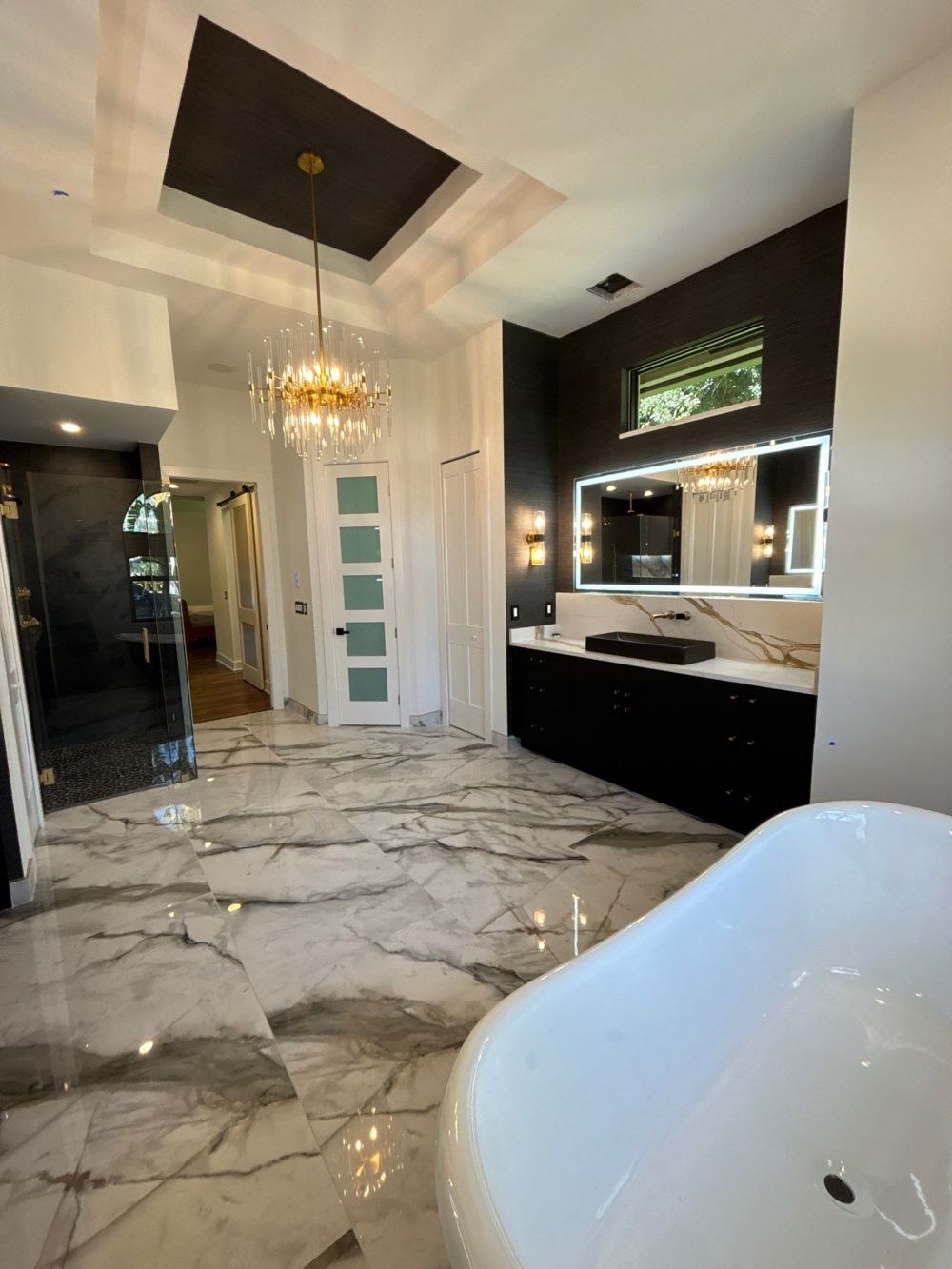
In Florida, heated bathroom floors are a comfort upgrade, not a heating system. They take the chill off a tile floor on cool mornings, they work best under tile in a small room, and they are easiest to add during a bathroom remodel. Whether a heated bathroom floor is worth it depends on how much you value that comfort.
That is the short answer. The rest of this guide covers how electric floor heat works, why a warm climate changes the case for it, which floors and rooms suit it, what to plan during a remodel, and who should skip it.
How do heated bathroom floors work?
Most heated bathroom floors are electric. Heating cables or a heating mat are laid on the subfloor and covered by the finished floor, usually tile, and a thermostat controls them.
The US Department of Energy describes electric radiant floors as typically consisting of “electric heating cables built into the floor”, with systems using “electrical matting mounted on the subfloor below a floor covering such as tile” also available. The heat rises from the floor surface, so your feet feel it first.
There are also hydronic (hot water) radiant floors, which run warm water through tubing. Those are whole-house heating systems, and they are rarely part of a single bathroom remodel. This guide is about electric floors.
Does Florida change the math?
Yes. In a cold climate, a heated floor can be part of how a room is heated. In South Florida, it is mainly about how the floor feels underfoot on the cooler mornings of the year, so the case for it is comfort, not energy savings.
Two sources back this up:
- The DOE says that because of “the relatively high cost of electricity, electric radiant floors are usually only cost-effective if they include a significant thermal mass such as a thick concrete floor and your electric utility company offers time-of-use rates.” A bathroom floor warmed for short periods is not that case.
- A Penn State housing research center handout on radiant floors notes that electric radiant floors “typically are not used to ‘heat’ the space, but used as a secondary system to focus on specific areas of the home”, which is “why electric radiant floors are more commonly found in bathrooms” (PHRC).
So if you are weighing a heated bathroom floor in Palm Beach County, do not think of it as a way to save on your power bill. Think of it as you would a rain shower head or a lit mirror: something you choose because you like it.
What floors and rooms work best?
Tile is the best match. The DOE calls ceramic tile “the most common and effective floor covering for radiant floor heating, because it conducts heat well and adds thermal storage.” Natural stone works the same way, and tile is also the floor that feels coldest without heat.
| Floor type | Works with floor heat? | What to know |
|---|---|---|
| Ceramic or porcelain tile | Yes, the best match | Conducts and holds heat well (DOE) |
| Natural stone | Yes | Thin, conductive material that transfers heat well (PHRC) |
| Wood | Possible, with care | DOE: use laminated wood flooring rather than solid wood “to reduce the possibility of the wood shrinking and cracking” |
| Vinyl, carpet and other insulating floors | Possible, less effective | DOE: “any covering that insulates the floor from the room will decrease the efficiency of the system” |
For bathrooms in a humid climate, tile and stone are already common choices for other reasons. Our guide to bathroom materials for a humid climate covers how different floors hold up.
Rooms that suit floor heat are the ones where you stand barefoot on hard flooring: primary bathrooms, guest baths and the floor in front of a vanity or shower. Smaller rooms are the usual case.
Plan it during a bathroom remodel
The best time to add a heated bathroom floor is when the old floor is already coming up. The cables or mat go under the tile, so adding heat to an existing tiled floor usually means removing that tile.
If you are planning a remodel and want floor heat, decide early. These are the questions to settle before tile goes down:
- Which areas get heat. Usually the open floor where you stand, not under the vanity, toilet or tub.
-
Power. Electric floor heat needs a suitable circuit and protection. The exact requirements come from the product’s installation instructions and the electrical code, so have a licensed electrician plan and install the wiring.
-
Thermostat location. Pick a spot on the wall that is easy to reach and fits the room’s layout.
- Floor height. The heating layer and any setting materials add some thickness, which affects door clearances and the transition to the next room.
- Testing. Ask your installer how the system is checked before and after tile is set, so a damaged cable is caught before the floor is finished.
H&H’s services page lists “Exhaust, lighting, and heated floor where the layout allows” among the items in a bathroom remodel scope. If floor heat is on your list, raise it at the first meeting so it is designed in, not added later. For the bigger picture, see H&H’s bathroom remodeling page.
Do heated floors need a permit in Palm Beach County?
Check with your building department. Adding electric floor heat involves electrical work, and permit rules depend on your city, the scope of the remodel and your building.
In Palm Beach County, that means the county building division if you are in an unincorporated area, or your city’s building department if you are in a city such as Boca Raton, Delray Beach or West Palm Beach. In a condominium, the association may also have its own approval process for remodeling work. Ask before work starts, and follow the manufacturer’s installation instructions and local code.
What are the downsides of heated bathroom floors?
The main downsides are that they cost money to run on electricity, are hard to repair once tiled over, add a little floor height, and in Florida may not get used much.
- Running cost. They run on electricity, which the DOE calls relatively expensive for heating. In a warm climate the hours of use are short, but they are not free.
- Repairs mean lifting tile. The heating element sits under the finished floor, so a fault can mean removing tile to reach it.
- Planning and wiring. Floor heat needs its own electrical planning and a thermostat, which adds steps to a remodel.
- Floor build-up. The extra layer can affect thresholds and door clearances.
- Limited use. In South Florida, many homeowners may use it only on the cooler mornings of the year.
- It does not replace ventilation. Floor heat is not a moisture control system. A bathroom still needs an exhaust fan; the US EPA’s mold and moisture guide recommends running a fan or opening a window to increase bathroom ventilation.
Who should skip it?
Skip a heated bathroom floor if you are not opening the floor anyway, if your bathroom flooring is not tile or stone, or if comfort on a handful of cool mornings is not worth the planning and running cost to you. It may also make less sense in a bathroom that is rarely used, such as a guest bath in a seasonal home.
It is a better fit if you are already redoing the bathroom floor, you like a warm floor underfoot, and you plan to stay in the home long enough to enjoy it.
FAQ
Is heated bathroom flooring worth it in Florida? It can be, if you value comfort. In Florida a heated bathroom floor is a comfort feature for cool mornings, not a way to heat the house or save energy. It is most worth it when you are already replacing the floor during a remodel.
Do you need heated floors in Florida? No. They are a nice-to-have. Most Florida bathrooms do fine without them, and the case for them is comfort underfoot on tile rather than need.
Can tile floors be heated? Yes. The US Department of Energy calls ceramic tile the most common and effective floor covering for radiant floor heating, because it conducts heat well and adds thermal storage.
Can you add heated floors without remodeling the bathroom? Usually not with tile already down. The heating cables or mat go under the finished floor, so adding them typically means removing the existing tile. That is why floor heat is best planned during a remodel.
Do heated floors need their own circuit or a GFCI? Electrical requirements depend on the product and the electrical code. Follow the manufacturer’s installation instructions and local code, and have a licensed electrician plan and install the wiring.
Thinking about heated floors in your bathroom remodel?
If you are planning a bathroom remodel in Palm Beach County and want to know whether floor heat fits your layout, request a consultation with H&H Signature Renovations. You can also see what a full bathroom remodel covers, or browse small bathroom remodel ideas.
Sources
- US Department of Energy – Radiant Heating (Energy Saver). Live URL https://www.energy.gov/energysaver/radiant-heating returns 404; cited from the Web Archive snapshot of 2026-01-20 – https://web.archive.org/web/20260120193016/https://www.energy.gov/energysaver/radiant-heating
- Pennsylvania Housing Research Center (Penn State) – Radiant Floor Heating, webinar handout (Dec 2017) – https://www.phrc.psu.edu/assets/docs/Webinars/Radiantfloorhandouts.pdf
- US Environmental Protection Agency – A Brief Guide to Mold, Moisture and Your Home – https://www.epa.gov/mold/brief-guide-mold-moisture-and-your-home
- H&H Signature Renovations – Our Services (bathroom remodel scope) – https://hhsrenovations.com/our-services/ (read 2026-11-02)