Small Kitchen Renovation: Complete Guide to Compact Kitchen Remodels and Design Ideas
A small kitchen renovation focuses on rethinking compact footprints to improve functionality, appearance, and property value through deliberate layout, storage, and material choices. This guide explains what a “small kitchen” remodel covers, why optimising workflow and storage matters for everyday cooking, and how compact kitchen design choices can deliver big benefits in small spaces. Homeowners will learn the best layouts for maximising space, high-impact design and material choices for 2025, practical storage solutions, realistic cost ranges, value-adding enhancements, and how to plan a straightforward renovation. The article also covers when to DIY and when to hire professionals, and includes local options for homeowners in the who need Major Renovations or Custom Projects support. Read on for ranked layout recommendations, material comparisons, EAV-style cost and storage tables, and a step-by-step planning checklist that helps translate small kitchen ideas into an achievable, affordable remodel.
What Are the Best Small Kitchen Layouts for Maximising Space?
Best small kitchen layouts are focused configurations that position work zones efficiently to reduce wasted movement and improve cooking flow; compact layouts work by aligning prep, cook, and clean zones to shorten circulation and maximise usable surfaces. Choosing the right layout depends on the room geometry and household habits, and selecting a layout correctly increases usable counter space and storage without structural change. This section ranks practical layout types for small kitchens and explains where each is most effective, helping homeowners compare galley, L-shaped, and one-wall approaches before moving into detailed layout choices below.
How Does a Galley Kitchen Optimise Small Spaces?
A galley kitchen positions two parallel runs of units to create an efficient, compact workflow that links preparation, cooking, and cleaning zones within a tight footprint. This layout reduces travel distance between appliances and allows continuous countertop workspace, which improves workflow in narrow rooms and supports a compact working triangle for one or two cooks. Galley kitchens benefit from tall storage at the ends, slim pull-out pantries, and overhead lighting to avoid a claustrophobic feel while retaining functionality. Consider parallel placement of fridge and oven on opposite runs to avoid bottlenecks, and use the last sentence to introduce an alternative layout that opens the plan.
Galley efficiency leads naturally to the flexibility of L-shaped layouts when a kitchen can open onto an adjacent space and requires different corner solutions.
Designing Kitchens for Small Domestic Spaces: Evolution and Arrangement Principles
This paper focuses on the evolution and examples of types of small kitchens, alongside selected principles concerning the improvement of their arrangement conditions. Throughout the centuries, meal preparation has been a primary domestic activity. However, the role of household chores, meal preparation, and kitchens themselves have changed significantly over time. Initially, ‘the kitchen space’ was confined solely to
What Are the Advantages of L-Shaped Kitchen Designs for Small Areas?
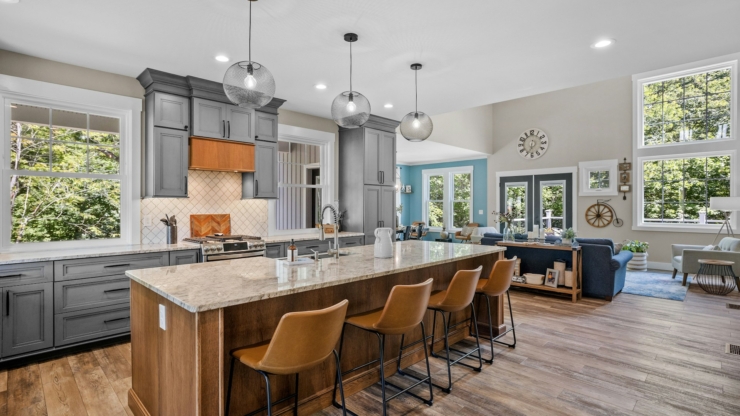
L-shaped kitchens use two adjoining walls to free a central circulation zone, opening sightlines and creating room for a small island or dining nook when space allows. This configuration adapts well to open-plan living and can allocate a corner unit for specialised storage such as a corner carousel or magic corner to reclaim otherwise wasted space. The L-shape makes zoning simple—one wall for cooking and prep, the other for cleaning and storage—while maintaining compact work distances for daily tasks. When an island is feasible, choose a slim, multi-functional unit that adds prep surface and seating without obstructing flow.
The one-wall layout is the most compact option and relies heavily on vertical organisation and integrated appliances to preserve functionality.
How Can One-Wall Kitchen Layouts Improve Functionality?
One-wall kitchens condense all units and appliances into a single run, making them ideal for studio flats, annexes, and very small footprints where lateral space is limited. To keep functionality high, designers stack appliances vertically, use slim integrated dishwashers and full-height storage, and apply zoned shelving to separate prep, cook, and clean tasks within the single run. Good lighting and reflective finishes help maintain visual depth while pull-out storage and organised drawer systems increase usable capacity. For compact kitchens that require openness, the one-wall layout prioritises vertical storage and integrated appliances to maintain workflow without expanding the footprint.
Which Layouts Enhance Workflow in Compact Kitchens?
Workflow-enhancing layouts emphasise a compact working triangle between sink, hob, and fridge, and incorporate clear circulation paths that avoid obstruction from doors or islands. In small kitchens, adapt the working triangle to reduced distances—aim for shorter, unobstructed routes of movement and place high-use storage adjacent to prep areas to reduce time spent moving between zones. Zoning the kitchen into prep, cook, and clean areas and ensuring at least 800–900mm clearances in primary walkways prevents collisions and improves ergonomics. Use the last sentence to lead into material and finish choices that support visibility and usability in tight layouts.
What Are Top Compact Kitchen Design Ideas for Small Spaces?
Compact kitchen design ideas centre on finishes, colour, and hardware choices that create perceived space, improve durability, and simplify maintenance—these elements work together to make small kitchen designs feel larger and perform better. The right palette, worktop, and cabinet finish influence how light moves through the room, while minimalistic hardware and integrated appliances reduce visual clutter and support a streamlined aesthetic. Below are practical guidance and an EAV-style table mapping materials/finishes to properties and benefits that clarify trade-offs for homeowners planning an affordable small kitchen remodel.
How finishes affect perception is central to design choices; the following table maps common finishes to their properties and benefits in small kitchens.
This materials table clarifies how selecting elements like gloss cabinetry or quartz worktops contributes to perceived size and durability; the next paragraph explores colour strategies that pair with these materials.
How Do Colour Schemes Make Small Kitchens Appear Larger?
Light, neutral colour schemes expand visual space by reflecting natural and artificial light, while strategic accents add personality without overwhelming a compact room. Use light tones on cabinetry, ceilings, and larger surfaces to create continuity, and reserve darker or bold colours for small focal points such as a splashback or open shelving to preserve depth. Contrast between worktop and cabinet can define zones, but maintain a cohesive palette so the eye moves continuously rather than stopping abruptly. Thoughtful colour layering supports the minimal hardware and reflective finishes discussed next.
What Materials and Finishes Work Best in Small Kitchen Remodels?
Choose durable, low-maintenance surfaces that balance visual lightness with longevity; quartz and high-pressure laminates offer long-term performance while gloss or light wood-effect cabinets enhance perception of space. Flooring continuity—using the same floor throughout the adjacent living area—creates visual flow that makes small kitchens feel larger, and porcelain or vinyl tiles offer water resistance and easy cleaning. Consider splashbacks in glass or slim tiles to reflect light and simplify maintenance, and pick cabinet finishes that resist scuffs while matching worktop durability. The table above summarises these choices and helps prioritise spend where longevity and brightness provide most value.
How Can Minimalistic Hardware Improve Small Kitchen Aesthetics?
Minimalistic hardware—handleless doors, recessed pulls, and slim-profile handles—reduces visual clutter and creates cleaner sightlines that make compact kitchens feel more spacious. Handleless systems with integrated finger pulls or push-to-open mechanisms are particularly effective on continuous cabinet runs, while slim metals in brushed finishes introduce a refined accent without dominating the palette. Functional benefits include reduced snag points and simpler cleaning, and the choice of hardware finish should coordinate with tapware and lighting to create a cohesive scheme. Effective hardware choices close the gap between design intent and day-to-day usability, and they naturally lead into contemporary 2025 trends.
What Are the Latest 2025 Trends in Small Kitchen Design?
Current 2025 trends focus on function-first design, sustainable materials, and subtle tech integration that suits compact kitchens without adding visual weight. Expect recycled or responsibly sourced worktops, compact integrated appliances with multi-function features, and textured accents used sparingly to add character while maintaining a minimal palette. Designers increasingly recommend modular, multi-use units and smart lighting systems that respond to tasks, which improves energy efficiency and user convenience. These trends support long-term value in small kitchens and connect directly to storage strategies that reclaim every usable centimetre.
How Can You Maximise Storage in a Small Kitchen?
Maximising storage in a small kitchen requires a combination of pull-outs, vertical storage, integrated appliance concealment, and corner solutions that use every available volume efficiently. The aim is to convert wasted cavities into organised storage that supports cooking routines while keeping counters clear; fitting bespoke cabinetry or retrofit organisers often offers the best space-to-cost ratio. Below is an EAV-style comparison table of storage solutions, followed by targeted ideas and business integration notes about bespoke cabinetry for homeowners who want design and installation support.
The table compares common storage approaches and where they perform best in small kitchens.
This comparison shows which storage systems are effective where; the next paragraphs describe pull-out pantries and vertical systems in practical detail.
What Are Effective Pull-Out Pantry Ideas for Small Kitchens?
Pull-out pantries convert narrow gaps into highly organised storage with tiered shelves or wire baskets that improve visibility and reduce wasted depth. Slim pull-out units 150–300mm wide fit between appliances and tall cabinets, and accessories like spice racks, tiered shelving, and non-slip liners increase usability. Position a pull-out pantry adjacent to the main prep zone to keep frequently used ingredients reachable and combine with drawer organisers for lids and utensils to maintain order. Effective pull-outs improve workflow by relocating frequently accessed items to an ergonomic height, and the next subsection explains how tall vertical storage complements this approach.
How Does Vertical Storage Optimise Kitchen Space?
Vertical storage exploits wall height with full-height cabinets, shelving to ceiling, and over-cupboard storage that clears the floor and makes the room feel less crowded. Using a mix of open shelving for display and closed upper cabinets for less-used items balances accessibility with neatness, and lift mechanisms or step stools address accessibility concerns for high storage. Vertical organisation supports integrated lighting to highlight lower work surfaces while keeping upper storage unobtrusive, and safety brackets or soft-close systems add longevity to tall installations. High storage frees base units for more functional drawers and appliances, which dovetails with integrated appliance choices discussed next.
What Integrated Appliance Storage Options Are Available?
Integrated appliances—slim dishwashers, under-counter fridges, and built-in microwaves—provide a uniform aesthetic while saving visible space and allowing cabinet fronts to continue uninterrupted. Multi-function appliances such as combination ovens or compact induction hobs reduce the need for separate units, and carefully planning ventilation, power, and plumbing connections ensures installations meet performance requirements. Position integrated units near prep and clean zones to support workflow and choose appliance sizes that align with storage dimensions to avoid retrofitting issues. Proper integration reduces clutter and maintains the minimalist lines recommended earlier, and corner solutions complete the storage picture.
Which Corner Cabinet Solutions Save Space?
Corner solutions like lazy Susans, magic corners, and bespoke pull-out systems differ in access speed, storage density, and cost, and selecting the right approach depends on how often items are used. Lazy Susans offer immediate visibility for frequently used pots, while magic corner mechanisms pull contents out into the kitchen for easier reach but require precise installation. Bespoke corner units can be designed to match shelf heights and drawer organisers, increasing storage density and maximising awkward spaces. Consider maintenance and longevity—metal runners and soft-close fittings extend lifespan—and when complex joinery is needed, a professional fit can ensure durability and smooth operation.
What Is the Typical Small Kitchen Remodel Cost?
Typical small kitchen remodel costs in the vary by scope: basic refreshes minimise plumbing and layout changes, mid-range remodels replace cabinets and appliances, and high-end remodels include bespoke joinery and significant reconfiguration. Cost drivers are cabinets, worktops, and labour, with cabinets often representing a sizeable portion of the total; transparent cost breakdowns help households decide where to invest for maximum impact. Below is an EAV-style cost table comparing basic, mid-range, and high-end project tiers and showing how components contribute to overall spend, followed by practical budgeting tips and guidance on when to hire professionals.
The table summarises estimated cost bands and main contributors for small kitchen remodels.
This breakdown highlights where money is usually spent and helps prioritise choices; the next sections explain cabinet and worktop cost considerations and budget-friendly tactics.
How Much Do Kitchen Cabinets and Worktops Usually Cost?
Cabinets typically form 30–50% of a small kitchen remodel budget, with stock or semi-custom units at the lower end and bespoke cabinetry at the higher end due to joinery and fit costs. Worktops vary widely—laminate and engineered surfaces are cost-effective, while quartz and natural stone demand premium prices but offer longevity and low maintenance. Labour for fitting cabinets and worktops is a significant cost and should be quoted separately to identify mark-ups on materials. Prioritise durable base units and consider cosmetic upgrades like re-facing doors if budget is limited; understanding these trade-offs informs whether to pursue a full replacement or a targeted refresh.
What Are Budget-Friendly Kitchen Makeover Tips?
Budget-friendly updates can dramatically change appearance: repainting cabinets, changing handles, updating splashbacks, and installing new lighting deliver visible impact for modest cost. Replacing only the most worn appliances or refacing cabinet doors extends the life of existing joinery while freeing funds for a new worktop or improved lighting. Use LED under-cabinet lights to lighten work surfaces and choose low-cost, high-impact backsplash tiles or panels for a refresh. These incremental strategies preserve budget for critical items and make a small kitchen feel up-to-date without a full high-cost renovation.
When Should You Choose DIY vs Professional Kitchen Remodel?
DIY suits cosmetic tasks—painting, changing handles, installing shelving—while electrical, gas, plumbing, and structural changes require certified trades to meet safety and compliance standards. A professional will manage project scheduling, obtain necessary approvals, and coordinate trades for complex work, which can save time and reduce costly mistakes even if upfront costs are higher. Consider ROI: tasks that affect long-term durability such as plumbing relocation or bespoke cabinetry often justify professional installation. For homeowners seeking full-scope quotes and project management, arranging a site visit with a professional specialising in Major Renovations can determine scope and schedule accurately.
What Small Kitchen Features and Enhancements Add Value?
Value-adding features in small kitchens improve everyday usability and appeal to buyers, with compact islands, layered lighting, and durable flooring offering strong returns relative to cost. These enhancements should be proportionate to the property and chosen to enhance perceived space and functionality rather than simply adding expense. The subsections below explore practical island solutions, lighting strategies, and flooring choices, and finish with guidance on minor extensions or reconfigurations that can make small kitchens more useful.
How Can Small Kitchen Islands Improve Functionality?
Scaled islands or movable kitchen carts provide extra prep surface, storage, and casual seating in compact kitchens, and when mobile they offer flexible workspace that can be repositioned as needed. Recommended clearances for a small island are typically 900mm around the main circulation to preserve flow, while narrow islands of 300–600mm depth suit tighter rooms. Choose islands with integrated storage or fold-away leafs to add seating without permanent obstruction, and consider worktop continuity to match the main counters for a cohesive look. The multi-function nature of an island makes it a cost-effective enhancement when sized correctly to the room.
What Are the Best Lighting Solutions for Small Kitchens?
Layered lighting—ambient, task, and accent—ensures bench areas are well lit for cooking while general lighting maintains even brightness across the room. Under-cabinet task lights reduce shadows on worktops, pendant lights provide focal points above small islands, and integrated LED strips can highlight open shelving without heat. Choose energy-efficient LED fixtures with high colour-rendering index (CRI) for accurate food preparation and consider dimming controls to adjust ambiance for dining. Thoughtful lighting improves both function and the visual sense of space, and pairs effectively with the flooring strategies discussed next.
Which Flooring Options Suit Small Kitchen Renovations?
Vinyl, porcelain, and engineered wood each balance durability, water resistance, and appearance differently—vinyl offers budget-friendly water resistance, porcelain provides longevity, and engineered wood contributes warmth while tolerating some moisture. Seamless transitions and consistent floor tones across adjacent rooms create visual continuity that enlarges perceived space, while smaller grout lines or plank widths can reduce visual busyness. Consider slip resistance, ease of cleaning, and maintenance requirements when choosing materials for a busy kitchen. Matching flooring to adjacent spaces can be a deceptively powerful way to make a small kitchen feel larger and more integrated.
What Are Practical Small Kitchen Extension Ideas?
Non-structural reconfigurations—removing a stud partition, relocating a doorway, or opening to an adjacent room—can deliver more usable plan area without full structural extension, but require assessment for services and load-bearing elements. Micro-extensions and fold-away dining solutions provide extra dining or storage space in constrained plots, and any structural change should be discussed with qualified professionals. In the context, local building norms and permit processes influence what is feasible, and consulting experienced trades early reduces the risk of delays or unexpected costs. When larger alterations are planned, coordinate with professionals to ensure compliance and reduce surprises during construction.
Why Choose Handsome Handyman LLC for Your Small Kitchen Remodel?
Handsome Handyman LLC offers local home repair and remodeling services and positions its Major Renovations and Custom Projects as options for homeowners who want professional, reliable craftsmanship for small kitchen remodels. Their approach emphasises professionalism, transparent communication, and on-site project management to coordinate trades, which supports efficient delivery of compact kitchen remodels and bespoke cabinetry solutions. For homeowners seeking local familiarity and a clear quote breakdown, Handsome Handyman LLC can provide a site visit and tailored proposal to define scope and schedule for Major Renovations or Custom Projects. This business-focused section complements the guidance above by offering a local execution pathway for homeowners ready to move from planning to delivery.
What Professionalism and Craftsmanship Does Handsome Handyman Offer?
Handsome Handyman LLC emphasises workmanship standards, clear timelines, and a tidy working approach to reduce disruption during renovations and improve homeowner confidence across project phases. Clients can expect site visits to verify measurements, phased scheduling to minimise downtime, clear communication about materials, and regular updates during work. The company’s project workflows typically include initial survey, design sign-off, phased installation, and final snagging to ensure quality control and client satisfaction. These practices align with best-practice remodel planning and support efficient delivery for small kitchen projects of varying complexity.
How Does Handsome Handyman Customise Small Kitchen Renovations?
Custom Projects from Handsome Handyman LLC can deliver bespoke cabinetry, tailored storage layouts, and coordinated finishes that address the constraints of compact kitchens and match client preferences and budgets. A short project template—problem, solution, result—helps clients visualise outcomes: e.g., constrained galley plan (problem) converted to efficient parallel zones with slim pull-outs and full-height storage (solution) resulting in improved workflow and surface area (result). Custom Projects emphasise collaboration with clients on material choices, hardware, and lighting to ensure the finished kitchen performs well and feels personalised. Bespoke solutions are particularly useful when off-the-shelf units cannot address unique spatial needs.
What Local Expertise Does Handsome Handyman Bring to Small Kitchen Projects?
As a local service in Palm Beach county, Handsome Handyman LLC brings knowledge of regional property types, typical space constraints, and local supplier options that speed procurement and reduce lead times. Familiarity with local permitting processes and common construction patterns allows the company to advise on practical reconfigurations and likely site-specific challenges. Proximity supports quicker site visits and more responsive scheduling compared with non-local contractors, improving clarity during the survey and quotation stage. Local expertise helps translate small kitchen ideas into realistic solutions that respect regional norms and material availability.
How Do You Plan and Prepare for a Small Kitchen Remodel?
Planning a small kitchen remodel requires accurate measurement, clear prioritisation of functions, realistic budgeting, and a phased timeline from survey to handover—these elements reduce surprises and support an efficient build. Use simple tools to create floor plans, moodboards for finishes, and a shopping list for appliances to reduce miscommunication with trades. Below is a step-by-step checklist to capture the critical planning stages and a budget allocation list to allocate funds effectively between cabinets, worktops, appliances, and labour.
Start planning using the following step-by-step checklist for clarity and to secure better quotes and scheduling.
- Step 1: Measure the existing kitchen and note plumbing, electrical, and load-bearing walls.
- Step 2: Define priorities—storage, worktop area, integrated appliances—and create a moodboard.
- Step 3: Obtain at least two quotes and compare materials, lead times, and labour costs.
- Step 4: Schedule work in phases and agree snagging and handover processes before work begins.
This stepwise approach ensures accurate scope and reduces the risk of delays, and the next subsection explains key design considerations that feed into these steps.
What Are Key Considerations When Designing a Small Kitchen?
Key design considerations include accurate measuring, defining primary activities (prep, cook, clean), optimising natural light, and ensuring sufficient ventilation to meet safety and comfort needs. Map appliance positions relative to plumbing and electrical services to avoid costly relocations, and prioritise accessible storage at worktop height for daily use items. Consider sightlines and adjacency to living areas to maintain visual continuity, and use mock-ups or scaled drawings to validate decisions before committing to purchases. Clear measurement and priority setting improve quote accuracy and reduce retrofit surprises during installation.
How Do You Set a Realistic Budget for Your Kitchen Renovation?
Allocate budget portions to cabinets, appliances, worktops, and labour with a contingency of 10–15% for unseen costs; a typical split might be 30–40% for cabinets, 10–20% for appliances, 10–20% for worktops, and 20–30% for labour and installation. Compare quotes line-by-line to spot differences in allowances for fittings, removal of old units, and finishing touches that affect overall cost. Consider staging purchases—upgrading cabinets now and appliances later—to spread expenditure, and prioritise durable items that reduce future maintenance spend. Setting clear priorities and contingencies provides a realistic financial roadmap for the project.
What Steps Are Involved in a Small Kitchen Renovation Project?
A kitchen renovation typically follows a sequence: initial site survey and design, procurement of materials, demolition and strip-out, installation of services and cabinets, worktop fitting, appliance installation, finishing works, and final snagging with client sign-off. Each phase requires coordination of trades—electrician, plumber, joiner—and scheduling to minimise downtime; clear phasing reduces overlap and confusion onsite. Expect final checks for warranties, appliance commissioning, and handover instructions on care and maintenance. Understanding the timeline helps homeowners plan for living arrangements and ensures smooth progression from concept to completed kitchen.
How Can You Use Visual Tools to Plan Your Small Kitchen Remodel?
Use 2D floor plans and simple 3D renderers to validate layout choices and sightlines, and compile moodboards for finishes and hardware to align expectations between homeowner and trades. Free planning apps or paid kitchen design packages let you test cabinet sizes, clearances, and appliance placements; exporting visuals for trades reduces miscommunication and speeds quoting. Create a photo bank of existing space and reference images to show exact examples of desired materials and fixtures. Visual tools improve precision in planning and help translate small kitchen ideas into realistic designs that trades can implement accurately.
A Smart, Compact Kitchen Layout for Optimal Space Utilisation
This work details the development of a prototype for a compact kitchen design within the Indian context. Given the prevalence of smaller living spaces, nuclear families, and busy lifestyles, the cooking experience requires enhanced efficiency and pleasantness. The objective of this research is to devise a compact, ergonomic kitchen layout that achieves optimal space utilisation, while also being low-maintenance, safe to use, and suitable for the evolving lifestyles of the elderly, bachelors, and working couples. The study’s methodology comprised three phases: a survey, ergonomic analysis, and design considerations. User need statements were formulated through the analysis of primary and secondary data. Mission statements were established to define design goals. Mind mapping and concept sketching were employed during the initial ideation cycle. The second ideation cycle involved visualising the space in three dimensions by constructing CAD models of the concepts. Finally, in the third ideation cycle, these concepts were screened and refined, culminating in a CAD prototype of the final design. The principal components of the kitchen, namely the work triangle, cabinet storage, and counter space, are all integrated into the design, ensuring it is sufficient to meet daily requirements. The proposed design adequately addresses basic needs while minimising space usage and maximising functionality. It is suitable for nuclear families and small households catering to one or two individuals per meal. The design is also proposed for deployment in temporary settings during disasters and medical emergencies.